
BI Analyst portfolio
Data Analysis & BI Engineering
-
Python
pandas, seaborn, numpy, scipy, statsmodels, matplotlib, plotly, sqlalchemy, folium, IPython, os, phik, sklearn -
PostgreSQL
Aggregation, grouping, JOIN, subqueries, CTE, window functions -
Statistical data analysis
Student's T-test, Mann-Whitney U-test, Fischer Z-test -
Cohort analysis, unit economics
LTV, CAC, ROI, ARPU, CR, Retention Rate -
Prioritization of hypotheses
ICE, RICE, analysis of A/B test results -
Basics of Machine Learning
EDA, regression, classification, clustering -
ELT orchestration
dbt-core, Jinja/SQL, dbt_utils, Apache Airflow, DAG, Git -
Web analytics
Google Tag Manager, Google Analytics, Google Search Console, Tilda, CRO, VWO, Yandex.Metrica, Yandex.Webmaster
-
Prioritization of hypotheses and analysis of A/B test results ➚
Python: pandas, seaborn, numpy, scipy.stats.mannwhitneyu, matplotlib -
Market research ➚ of public food establishments in Moscow
Python: pandas, matplotlib, seaborn, numpy, scipy.stats.ttest_ind, plotly.graph_objects, folium.Map, Choropleth, Marker, DivIcon, folium.plugins.MarkerCluster -
Analysis of the subscription ➚ book reading service
PostgreSQL, Python: pandas, SQLAlchemy -
Analysis of bank ➚ customer churn
Python: pandas, numpy, matplotlib, seaborn, phik, scipy.stats.mannwhitneyu, scipy.stats.ttest_ind, statsmodels.stats.proportion.proportions_ztest -
Investigation of the sales funnel ➚ and the results of the A/A/B experiment
Python: pandas, matplotlib, seaborn, numpy, scipy.stats.ttest_ind, scipy.stats.mannwhitneyu, statsmodels.stats.proportion.proportions_ztest, plotly.graph_objects -
Data transformation ➚ pipelines
dbt-core, Jinja/SQL, dbt_utils, PostgreSQL, Git -
ELT Orchestration ➚ with Airflow & dbt
Variables & Connections, XCom, Jinja templating, TriggerDagRunOperator, Slack alerting, GitHub Actions, PostgreSQL -
Increasing website loading speed ➚ and filtering low-quality traffic
Tilda, Google Tag Manager, Google Analytics, JavaScript, HTML
Tableau
- Visualize the results of the Barron's Spring 2026 Big Money Poll of U.S. professional investors to analyze their market sentiment and investment preferences
- Analyze the sentiment of portfolio managers and investment strategists toward U.S. and global equity markets
- Show the distribution of investment preferences across sectors, asset classes, and international markets
- Present investor forecasts for key economic metrics: inflation, Fed rate, Treasury yields, and GDP growth
- Collecting and preprocessing survey data from 105 professional asset managers
- Developing visualizations in Tableau
- Creating informational annotations, interactive highlights, and tooltips
- Publishing and presenting the dashboard ⧉
- Interactive Tableau dashboard with four thematic tabs: Markets, Assets, Equity, Economy
- Navigation system for switching between a global market overview and detailed analysis of individual asset classes and sectors
- Recorded a rise in optimism among professional investors: the share of bulls increased from 47% to 54%
- Identified the most attractive sectors: Energy (24%), IT (17%), and Industrials (15%)
- Determined asset class leaders: the strongest bullish sentiment was recorded for Commodities (75%) and non-U.S. equities (66%)
- The tool enables investors and analysts to quickly assess shifts in market sentiment and adjust investment strategies accordingly

- Visualize global shifts in U.S. crude oil and petroleum exports in 2025, highlighting key changes in trade partners and regional market shares
- Analyze import volume dynamics across the world’s major economies
- Clearly illustrate the redistribution of energy flows (e.g., the rise of India and the Netherlands against China’s declining share)
- Provide a tool for Year-over-Year (2024 vs. 2025) comparison by country and region
- Data preprocessing and energy shipment analysis using Python
- Generating special dataset with Claude
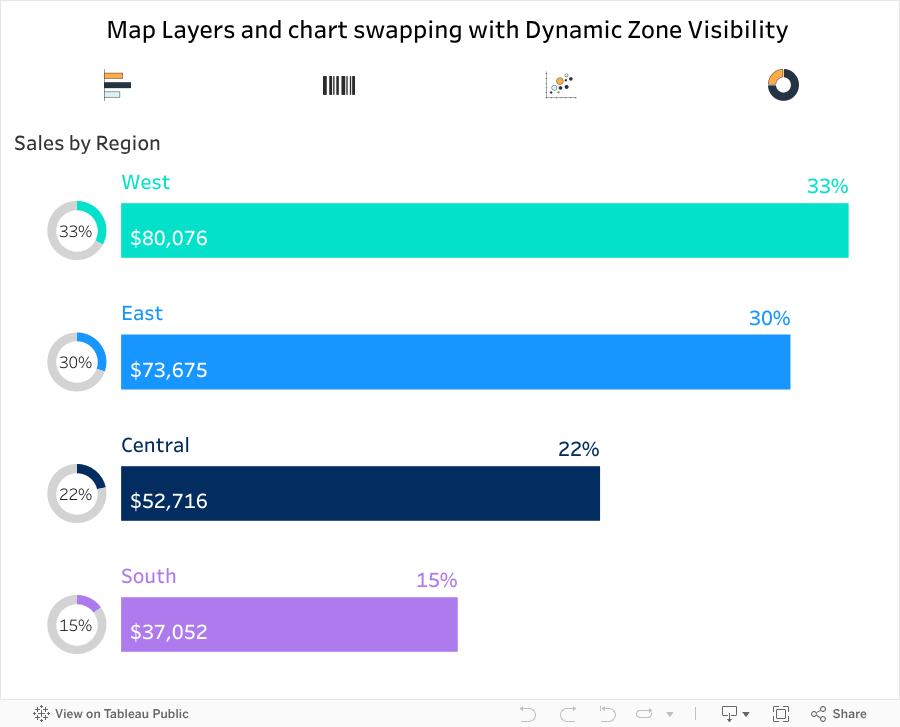
- Developing spatial visualizations using Map Layers in Tableau
- Configuring dynamic comparison elements to track market trends and growth rates
- Designing the UI in a Visual Capitalist-style infographic format for maximum readability
- Publishing and presenting the dashboard ⧉
- An interactive Tableau dashboard combining geographic mapping with detailed growth/decline charts
- A navigation system allowing users to toggle between global overviews and deep dives into specific markets (Netherlands, Mexico, China, etc.)
- Identified the Netherlands (Port of Rotterdam) as Europe's primary energy hub in 2025 (419M barrels)
- Captured a sharp 25% decrease in China’s reliance on U.S. oil, contrasted by a 35% surge in Indian imports.
- Highlighted Canada’s infrastructure-driven dependence on U.S. imports despite its own vast reserves
- Provided a high-level tool for investors and analysts to quickly assess geopolitical risks in the energy sector

- To identify the factors that most significantly influence the success or failure of startups
- Detect nonlinear relationships between numerical and categorical metrics that standard Pearson correlation fails to capture
- Provide users with a tool for conducting their own in-depth analysis of the distribution of results
- Calculating the Phik correlation matrix in Python to uncover nonlinear relationships
- Designing a PostgreSQL → Tableau data model
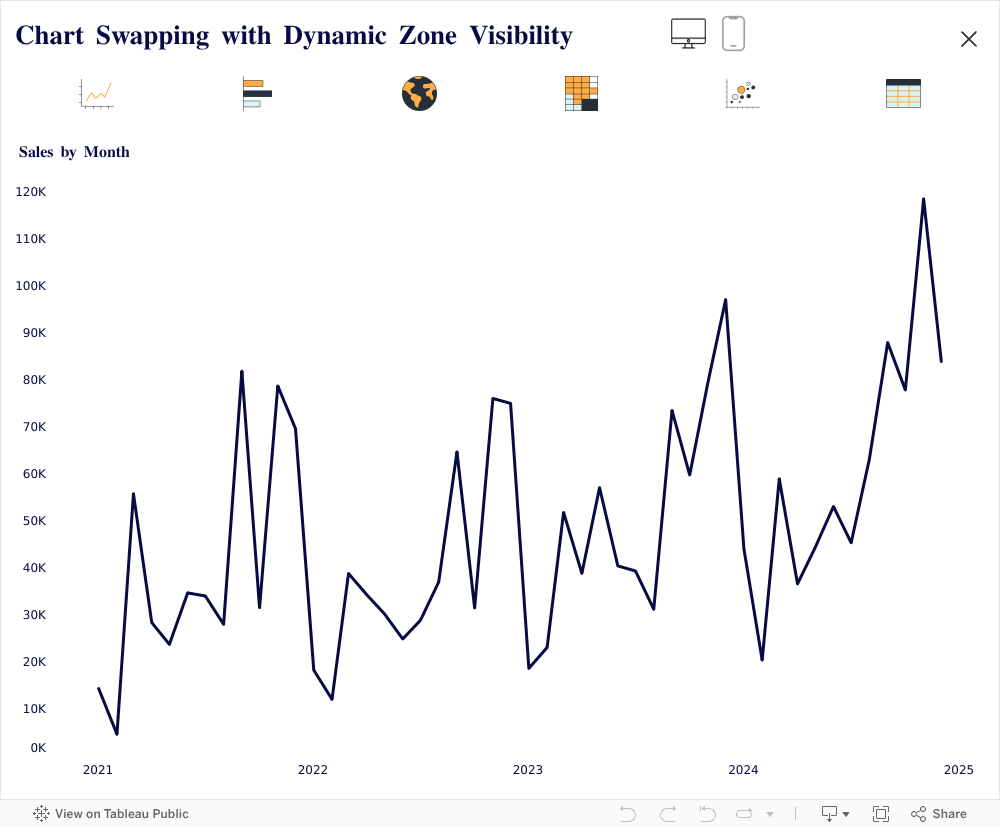
- Configuring a filtering and navigation panel using Dynamic Zone Visibility
- Creating explanatory notes, interactive highlights, and tooltips
- Publishing and presenting the dashboard ⧉
- Interactive dashboard in Tableau, integrated with PostgreSQL
- Navigation system for data exploration and drill-down into any metric
- Quantified venture risks through dependency analysis
- Identified critical metrics for strategy optimization
- Uncovered underperforming projects based on early indicators
- Projected a 20-30% increase in venture portfolio ROI

- To visualize the AI startup landscape and identify investment trends across 14 market categories for the period from February 2025 to February 2026
- Present 305 startups in a structured format while preserving 5 key parameters for each category
- Enable users to independently compare categories by funding volume, growth dynamics, and market trend
- Provide quick access to specific companies and market facts through interactive tooltips
- Adapting the Veridion external classification as a data source
- Designing a visual layout in periodic table format
- Placing parameters using Map Layers: investment ranking, market trend, annual growth, funding volume, number of companies
- Configuring tooltips with startup examples and analytical facts for each category
- Publishing and presenting the dashboard ⧉
- Interactive Tableau dashboard with a periodic table layout
- Navigation across five parameters through visual element placement
- Tooltips and bar charts as a second level of detail
- Visualized 14 AI market categories on a single screen
- Identified growth leaders: AI for Developers (+320%), AI Agents (+260%), and Vertical SaaS (+250%)
- Captured the market shift from general-purpose AI to sector-specific solutions
- Delivered a ready-to-use tool for initial screening of AI investment trends

- To visualize the risk-return relationship of asset classes and model investment portfolios based on 25 years of historical data (2001–2025)
- Illustrate the behavior of individual assets and diversified portfolios on the risk-return scatter plot
- Enable users to evaluate annual returns for any portfolio or asset over a selected period
- Provide filters by analysis period and asset classes
- Implement a "Quadrant View" mode to categorize portfolios based on target return and risk tolerance
- Collecting and calculating 25 years of historical data on asset returns in USD
- Creating a scatter plot with three types of objects: diamonds (asset classes), lines (portfolios of two assets), and grey dots (portfolios of three assets in 5% increments)
- Developing tooltips showing annual returns for each point and diamond
- Integrating filters by analysis period and asset classes
- Configuring Dynamic Zone Visibility for "Quadrant View" mode: when enabled, additional filters for target return and risk tolerance appear
- Publishing and presenting the dashboard ⧉
- An interactive Tableau dashboard based on a scatter plot with three levels of portfolio detail
- Visual tooltips showing annual returns as a second level of analysis for any point
- "Quadrant View" mode with dynamically appearing filters to assess portfolio relevance based on the investor's specified parameters
- Empirically validated the fundamental risk-return tradeoff using 25 years of real-world data
- Demonstrated the diversification effect, visually showing how two- and three-asset portfolios shift toward an optimized risk-return profile
- Built a dedicated tool for selecting model portfolios tailored to individual investor risk profiles
- Established a foundational framework for client advisory work on asset allocation


- To evaluate the effectiveness of ad placement filtering in the Yandex Advertising Network
- Compare the trends in key metrics before and after ad placement filtering
- Visualize the distribution of metrics by device type and ad placement quality
- Set up monitoring of filtering effectiveness with weekly updates
- Preparing and cleaning advertising campaign data from Yandex.Direct
- Designing a dashboard by device type (desktop, mobile, tablet) and ad placement type
- Configuring interactive highlights
- Customizing filters by ad placement, detail, and time period
- Publishing and presenting the dashboard ⧉
- An interactive dashboard in Tableau for monitoring the effectiveness of ad placement filtering by device and platform
- A system of highlights by device type as a tool for quick comparison of segments
- Cross-filters for independent analysis of combinations of platforms and periods
- Validated the necessity of placement filtering, as irrelevant platforms lower ROAS
- Created a dedicated tool for regular ad placement audits
- Established a methodology requiring blocklist moderation at least twice a year
- Recommended allocating 10-15% of the budget to continuous mobile placement testing, given their high ROAS potential

Contacts
Hello!
I'm a bridge between business challenges and data-driven solutions.
Focusing on product growth and marketing efficiency in financial services. I help businesses reduce churn rates, optimize marketing funnels, and identify segments with the highest lifetime value (LTV). Understanding business needs, asking the right questions, and translating requirements into actionable insights - that's what empowers teams to make informed, effective decisions.
Key areas of expertise:
• Ad-hoc analytics: extracting hidden insights to solve immediate business problems (e.g., identified a 15% drop in ROAS across ad networks)
• Data analysis: leveraging SQL and Python to extract, clean, and analyze datasets for cross-functional teams
• Data visualization: building interactive dashboards in Tableau for daily operational and strategic monitoring
• Process optimization: automating reporting to streamline operations, saving the team hours of manual work per week
Currently seeking new opportunities to leverage BI analytical expertise to drive growth. Let’s connect and discuss how your team can reach its goals through data-driven insights!